
Crisis in West Asia: Modi’s 4th CCS Meeting on India’s LPG & Fertilizer Readiness.
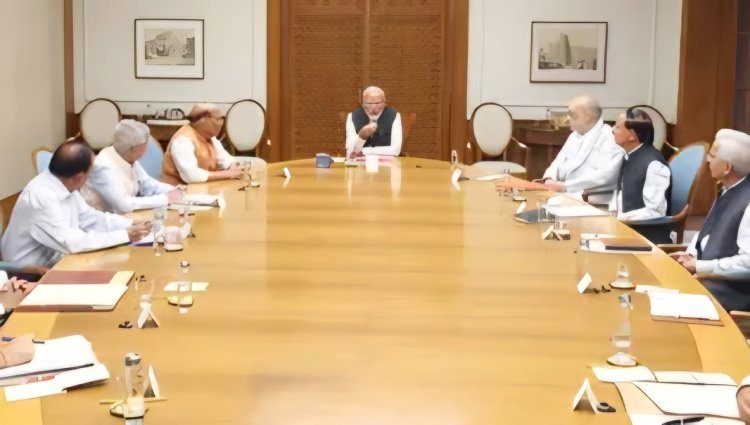
Prime Minister Narendra Modi chaired the 4th CCS meeting to address India’s preparedness on LPG and fertilizers amid the deepening West Asia crisis.
 Ankush Pandey
Highlights
- PM Modi chairs CCS meeting on West Asia crisis.
- Focus on energy, fertilizer security and safety of Indian citizens
- Government reviews comprehensive strategy to tackle the crisis
Amid clear signs of the escalating conflict in West Asia, Prime Minister Narendra Modi on Thursday convened a special meeting of the Cabinet Committee on Security (CCS). This marked the fourth CCS session dedicated to this pressing issue.
During the meeting, a 360‑degree review of the current geopolitical situation was carried out, with detailed discussions on measures to counter the potential impact on India.
Key concerns included the possibility of fertilizer supply disruptions, the state of energy security, and emergency strategies to safeguard more than 10 million Indians living in the Gulf region if the crisis deepens further.
According to official information, the Cabinet Secretary briefed the committee on the current situation. He outlined the measures being taken to ensure adequate supply of petroleum products, including LNG and LPG, as well as fertilizers.
It was highlighted that India has already diversified its sources of LPG imports, and the stock and supply position of key petroleum products remains sufficient. Thanks to the availability of adequate crude oil, central public sector refineries are currently operating at over 100 percent capacity.
The government is also pushing forward measures such as expanding piped natural gas (PNG) connections and extending the National Gas Grid to strengthen energy resilience.These initiatives were launched as early as March 2026, when the Iran‑Israel‑US conflict had triggered a severe cooking gas crisis in India.
Government Weighs Every Angle of the Crisis"
For the upcoming Rabi season, fertilizer requirements have been carefully assessed, and discussions were held on alternative sources to ensure uninterrupted supply. Prime Minister Modi directed officials to take all necessary steps to guarantee smooth availability of fertilizers.
The committee also reviewed the situation of Indian sailors serving on both domestic and foreign‑flagged vessels in the conflict zone.
India, being one of the world’s largest fertilizer consumers, uses nearly 40 million tonnes of urea annually, while the total consumption of all major fertilizers stands at around 60–70 million tonnes.
Despite the ongoing West Asia crisis in July 2026, the government maintains that the situation remains comfortable. For the Kharif 2026 season, urea demand was estimated at about 10.9–11 million tonnes, while availability stood at 16.3 million tonnes. Stocks of DAP, MOP, and NPKS are also sufficient.
Since the outbreak of the crisis, the government has built a buffer stock through additional imports and enhanced domestic production. At present, there is no immediate fear of shortages, though global prices and supply chains are being closely monitored.
Ensuring the Safety of Indian Sailors
Prime Minister Modi directed the establishment of a mechanism to provide timely information, emergency assistance, and counseling to sailors and their families.
He emphasized that every possible effort must be made to safeguard Indian citizens and the diaspora from the fallout of the conflict. Stressing the importance of energy independence, the Prime Minister highlighted the need to accelerate the use of renewable and non‑fossil fuel sources, including solar energy.
Additionally, he called for the creation of an integrated and coordinated system to regularly monitor developments. This would ensure the swift implementation of protective measures aimed at securing the interests of citizens in the face of emerging challenges.
The US‑Iran conflict in West Asia has flared up once again. Despite the agreement reached in June, tensions escalated in July, leading to continued American strikes and Iranian retaliatory actions.
Concerns remain high over the Strait of Hormuz, with reports of attacks in regional countries and mounting pressure on global oil prices. Experts are describing the situation as increasingly serious.