
Awarapan 2 movie review: Emraan Hashmi Goes Massy.
Even tho the action scenes, lighting, and camerawork have significantly improved since 2007, the sequel finds it difficult to maintain coherence since it views the universe of "Awarapan" as merely a generic genre piece, even tho its essence is elsewhere.
 Ankush Pandey
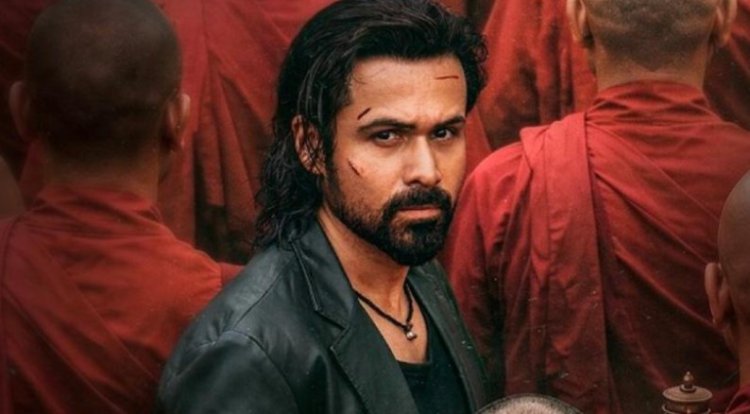
Awarapan has been a ghost since its 2007 debut. More people talked about it and fewer people watched it. Its main character, Shivam (Emraan Hashmi), was immortalised by his sacrifice and came to represent love and loneliness. The worst of his constant vagrancy was visible on his dejected face. Shivam was deadly because he showed no signs of life.
He was devastated to see his beloved die, but he found the strength to live by keeping her memory alive. That was what set him apart from Kim Sun-woo (Lee Byung-hun), the endearing, straightforward lead character in the romantic South Korean drama A Bittersweet Life, which served as the model for the unofficial Awarapan version. Even so, director Mohit Suri and writer Shagufta Rafique revitalised the 2007 picture with its poignant, melodic meditation on love as the germ of liberty and faith as a route to healing.
The sequel, on the other hand, ignores what initially made Shivam so captivating. There was a hint of the divine in his purported death at the conclusion of the first section, which brought two lovers together. It turned into a historic sacrifice that atoned for his previous transgressions and brought him and his lover together in paradise. But contrary to what the sequel claims, Shivam survived.
He now leads a quiet life in the Indian countryside decades after the deadly day, visiting Aaliyah's (Shriya Saran) cemetery and pondering the purpose of his life while still dealing with the agony of being parted from her. Oddly, he is still trapped in his own reflection. In the magnificent finale of Awarapan, the development of Shivam's mental state is quickly disregarded. Instead, he turns into his own archetype.
Awarapan 2 (Hindi)
AwarapanLegacy
Awarapan Legacy
One of the best examples of a box office failure turning into a huge cult classic is the original Awarapan, an unofficial remake of the Korean drama A Bittersweet Life.
The hero's ongoing trauma and spiritual restoration resonated with many. I always had a small complaint about that messaging since it basically said that religion was the only path to moral salvation and Shivam's atheism led him down a terrible path. Nevertheless, the narrative decision was ideal for Awarapan. The enduring appeal makes perfect sense when you include a fantastic, if borrowed, soundtrack.
Nitin Kakkar, who took over for original director Mohit Suri, is well aware of the heritage of Awarapan.
He pushes Shivam to free a new flock of "pigeons," channelling the protagonist's ongoing pain into a new chapter. Shivam decides to release the "poor" rich daughter Zara (Disha Patani) and her autistic older brother Sikandar (Aniruddh Rawal) in addition to saving young Aaliyah. Zorawar (Puran Gabbi), their brutal younger sibling who usurped his father's criminal business thru cold-blooded murder, is their prisoner.
Zorawar continues his father's turf war against a rival group headed by the fearsome Nafisa (Shabana Azmi) while leading the same trafficking ring that is holding Aaliyah captive.
His outward appearance is given more attention. Apart from his sleek biceps, his resurrection is briefly described without going into detail about what really altered his personality. As a result, Shivam is still bound to the character he was in the first portion of the movie, a version that stuck in the hearts of viewers and inspired the creation of a follow-up. This means that there is more pandering than movement. Shivam is now a set piece rather than a real person.

He is tasked with saving a number of kidnaped children from the perils of human trafficking. He gave Aaliyah the same name after discovering one of them next to her tomb. He declares, "I won't let Aaliyah die again," to an Interpol investigator who asks for his assistance in breaking up the gangster network in Bangkok, which is run by competitors Nafeesa, Shabana Azmi's enigmatic boss woman, and the vicious Zoravar (Puran Gabbi).
His sister Zara (a delightful Disha Patani) is caught in the midst of Zoravar's wrath, and her suffering is reflected in the cello's notes, evoking thoughts of A Bittersweet Life. Awarapan 2 pays homage to the South Korean movie once more by replicating a famous scene in which a disassembled gun's parts are arranged and the first blow is taken.