Big Update for Gmail Users Can Finally Change Their Email Address After 20 Years
Big Update for Gmail Users: After 20 years, Google has finally rolled out a major update for Gmail users. Now, users can change their email address without creating a new account. This long-awaited feature is set to make email management easier than ever. Here’s how it works and what it means for millions of Gmail users worldwide.
 Ankush Pandey
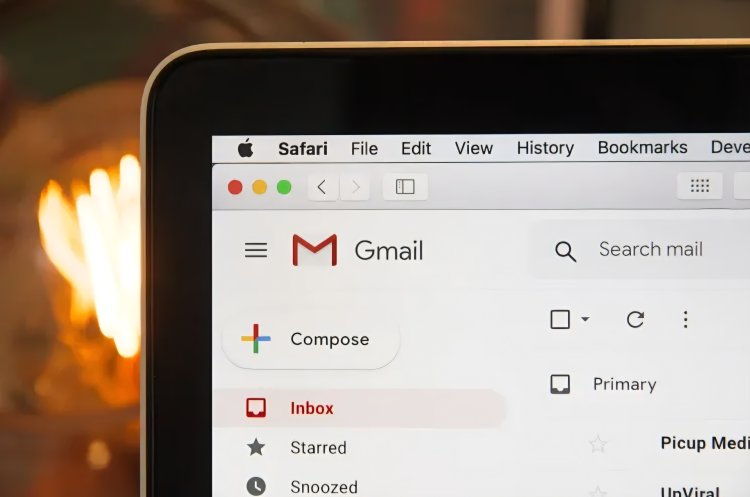
For almost 20 years, Gmail users have been imprisoned virtually. Whether you liked it or not, "coolguy2007@gmail.com" was your permanent email address once you selected it. However, Android Central reports that Google seems to be planning one of the biggest updates to Gmail since its debut: the option to modify your Gmail username without making a new account.
Google launches its Google Wallet in India: How to use Google Wallet Here's how
This is a significant change in Google's approach to digital identification. Numerous reports indicate that Google is at last prepared to remove the restriction that has prevented millions of users from using their original email addresses. With reference materials appearing in Hindi, the functionality seems to be beginning its spread in India.
This suggests Google is testing regional deployment before taking on the challenges of a global launch across their billions of users. This is also noteworthy since it shows Google's understanding that users' digital identities change over time, which should have been clear given the career changes, life transitions, and professional development that occur during Gmail's two decades of existence.
Demand for cloud engineers is increasing
Why this changes everything for Gmail users
Let's break what makes this upgrade groundbreaking for Google's ecosystem strategy as well as for individual users. Anyone who has ever regretted their teenage email decisions is all too familiar with the painful truth that Gmail users currently confront. There is just no simple way to modify your Gmail username, as Android Central points out. Yes, you may change your display name, but that real @gmail.com address? Completely unchangeable.
In the world of digital identities, this restriction has produced a special problem. Gmail's approach has been absolute: your address choice is permanent, in contrast to other major email companies that have provided address modification choices through various workarounds. Up until now, the only option has been to give up years of digital history—we're talking about losing access to years' worth of emails, Drive files, YouTube subscriptions, Google Photos libraries, and numerous other related services.
Gmail Tricks: If your Gmail storage is full, there is an easy solution to empty it
In addition to tackling the fundamental issue that has kept consumers confined to Google's ecosystem out of need rather than choice, the new feature promises to neatly tackle this problem. Google's support literature states that customers will be able to switch to a new Gmail username without losing any of their existing data, services, or account history.
The way Google manages the changeover phase to guarantee that there is no interruption to communication flow is quite brilliant. According to research, the former Gmail address is still in use as a backup address, resulting in what is essentially a system of professional dual identities. In essence, you'll have two working email addresses connected to one account, allowing for smooth transitions for various situations—professional networking with your polished new address while preserving continuity with current contacts who are familiar with your old one.
'India things' that Pakistan searched up on Google in 2024
This method acknowledges that email addresses are more than simply instruments for communication; they are digital identities that affect everything from corporate legitimacy to job applications. Users can now finally update their professional presence without compromising their digital heritage thanks to this service.
The smart limitations Google has put in place
Through carefully thought-out limitations, Google's approach demonstrates thorough consideration of both user experience and platform integrity. Users are limited to changing their Gmail address once every 12 months, with a maximum of three changes per account, according to Hindustan Times. This policy strikes a balance between user flexibility and security concerns.
Beyond stopping spam or abuse, some restrictions have strategic uses. According to reports, users may access up to four different Gmail usernames over the course of their account's lifetime. This is consistent with realistic life transitions, such as switching from a casual college address to a more professional one, advancing in one's career, and making a final adjustment for significant life changes like getting married or starting a business.
The 12-month waiting period is an example of advanced security thinking. Sources claim that during this time, the previous Gmail username is still associated with the current account, making it impossible for anyone to create new accounts using that address. By doing this, potential impersonation scenarios are eliminated and users are protected from unintentionally locking themselves out of services that could have cached their previous address.
Practical precautions for various device ecosystems are also included in the constraints. Because Chromebook users will need to delete and re-add their Google account with the new email address, there is particular advice for backing up local files first. This degree of implementation detail implies that Google evaluated the feature extensively throughout their whole software and hardware ecosystem before to launch. Although the existing architecture offers significant flexibility for acceptable use cases, Google recognises that limitless address changes would erode the confidence and dependability that make email addresses valuable as identity anchors.
What the rollout means for Google's ecosystem strategy
This feature is much more than just a convenience for users; it's a calculated reaction to pressure from the competition in digital identity management and a step to improve ecosystem retention in a market where privacy is becoming more and more important. According to analysis, Google wants to increase ecosystem stickiness and user retention by improving digital identity control, especially as it competes with Apple's privacy-focused alternatives and new email security solutions.
How to switch from Gmail to Zoho mail
The timing coincides with more general email security issues that have an impact on user confidence and platform switching choices. According to Forbes, over 46.8% of emails are spam, which makes email management and identity control crucial differentiators in the marketplace. Google's "Shielded Email" aliases and address-change feature point to a comprehensive approach to address contemporary email identity issues while retaining users within their ecosystem.
Think about the retention implications: consumers can now remain in Google's ecosystem instead of moving to another email provider in search of a new beginning. It is no longer necessary to give up Drive files, YouTube subscriptions, or Google Photos libraries in order to establish professional email credibility for someone who set up their Gmail account years ago and has been annoyed by their out-of-date address. As a result, one of the few reasons consumers had to completely stop using Google's services is eliminated.
Sundar Pichai offers free ChatGPT 4o in response to OpenAI taking its thunder.
Google's comprehensive approach to managing large-scale feature deployments while obtaining market intelligence is shown in the regional rollout plan. According to available data, support pages are only available in Hindi, suggesting that the service is initially being introduced in India. When handling billions of user accounts, where even minor technological problems could impact millions, this methodical approach enables Google to evaluate user adoption trends, discover edge cases, and tweak the feature based on real-world usage data prior to global implementation.
Google appears to understand that different markets have varied levels of tolerance for changes in digital identities as well as distinct legislative concerns around data management and user privacy, as evidenced by the India-first deployment.
UPI Server Down and No Cash? Here's How to Handle Payments.
What this means for your digital future
The ramifications go far beyond aesthetic email enhancements to include significant adjustments to the way we handle our digital identities in our increasingly interconnected lives. This tool provides genuine change without the catastrophic interruption of account transfer for users who are trapped with addresses that no longer accurately reflect their personal or professional identities. All account information, including emails, pictures, Drive files, and linked services, is still accessible, as Google's literature attests, but users can now match their online persona to their real situation.
Consider the wider ramifications for various user demographics: college students can switch from informal to career-appropriate addresses without losing their academic email history when they enter the job. Without giving up on long-standing client communications, small business owners can transition from personal addresses to professional branding. Parents can preserve years of significant communication and digital mementos while updating addresses to reflect family names or life changes.
Paris Games 2024: Google celebrates climbing with a thrilling doodle. Check it out
Additionally, the function marks a substantial change in our understanding of the durability of digital identities. Users would reportedly be able to sign in with either their old or new address, giving them hitherto unheard-of freedom in how they show themselves in various settings and at different times. You can maintain multiple professional identities for various purposes while keeping all of your data consistent thanks to its dual-address functionality.
In the future, this shift reflects a wider industry understanding that digital identities must adapt to consumers' lifestyles rather than restrict them. When Gmail first appeared twenty years ago, the idea of eternal email addresses made sense in a world with fewer connections. However, that permanence has turned into a drawback rather than an advantage as our digital and physical lives have become more entwined.
Zoho CEO Sridhar Vembu Asks Users: Should Arattai Go All-In on Default End-to-End Encryption?
The implementation recognises that people's situations, goals, and identities naturally change over time and that your email address is frequently the first impression you make in both personal and professional environments. In summary, Gmail is finally maturing to reflect the way we live and work in 2025, giving you the freedom to change your online persona without compromising your digital past.
You may test out the many new features in Apple's iOS 26 and iPadOS 26 releases before nearly everyone else. You can install the iOS/iPadOS 26 beta without a paid developer account by first checking our list of compatible iPhone and iPad models and then following our detailed instructions.
How to Automatically Create Multiple Sub-folders in Google Drive.