
Today's Big Updates: Major Updates on PAN, FASTag, LPG Prices and Railways.
New financial year 2026 brings key updates: Income Tax rule changes, LPG cylinder price increase, revised salary structures, FASTag regulations, railway ticket rules, and credit score updates.
 Ankush Pandey
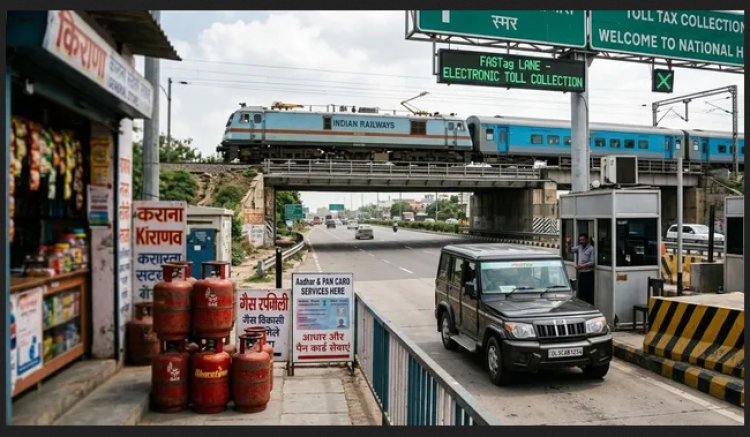
Today—April 1, 2026—marks the beginning of the new financial year, and along with it, several key regulations impacting your finances and daily life have changed. This first day of the financial year not only turns the calendar page but also brings about significant changes in your salary, taxation, railway travel, and digital payment methods.
New Rules By Indian Railways: Passengers who travel with waiting tickets please note, now you can be fined hundreds of rupees for traveling with waiting tickets
Ranging from income tax to FASTag and credit scores, the government and regulatory bodies are implementing eight major changes that will have a direct impact on your savings and expenses. Additionally, the price of LPG cylinders has also increased in the new financial year. This hike applies to commercial cylinders, with an increase of up to ₹218. In Delhi, a cylinder that previously cost ₹1,883 will now be available for ₹2,078.50.
A New Era of Income Tax: The Income Tax Act, 2025
The most significant change in the tax regime is about to take place. Effective April 1st, the old Income Tax Act of 1961 will become history, and the 'Income Tax Act, 2025' will come into force in its place. The objective of this new Act is to simplify tax procedures.

Under this change, confusing terms such as 'Assessment Year' (AY) and 'Previous Year' (PY) have now been eliminated. Moving forward, only the term 'Tax Year' will be used. This means that the period spanning from April 1, 2026, to March 31, 2027, will now be referred to simply as 'Tax Year 2026-27,' thereby reducing confusion for taxpayers.
AAP MLA Amanatullah Khan arrested by investigating agency ED after searching his house
Your 'Take-Home' Salary May Decrease
The government may implement the new Labor Codes starting April 1. If this occurs, companies will be required to make significant changes to their salary structures. According to the new regulations, it will be mandatory for an employee's basic salary to constitute at least 50% of their total CTC (Cost to Company).

When your basic salary increases, the contributions deducted towards your Provident Fund (PF) and gratuity will also rise. While the benefit of this is that you will receive a larger sum upon retirement, your monthly 'in-hand'—or take-home—salary will decrease in the short term.
Gratuity Benefits and Stricter HRA Norms
The implementation of the new labor codes also brings good news for employees. As the proportion of basic pay and Dearness Allowance (DA) within the salary structure increases, the total amount of your gratuity will see a corresponding rise. However, the regulations governing tax exemptions have been tightened.

Employees will now be required to submit their landlord's PAN card and concrete proof of rent payment to claim an exemption on House Rent Allowance (HRA). Without these documents, claiming a tax exemption could prove difficult.
FASTag and Highway Travel Set to Become More Expensive
If you frequently travel on highways, the financial burden on your pocket is about to increase. The National Highways Authority of India (NHAI) has decided to hike the prices of annual FASTag passes.
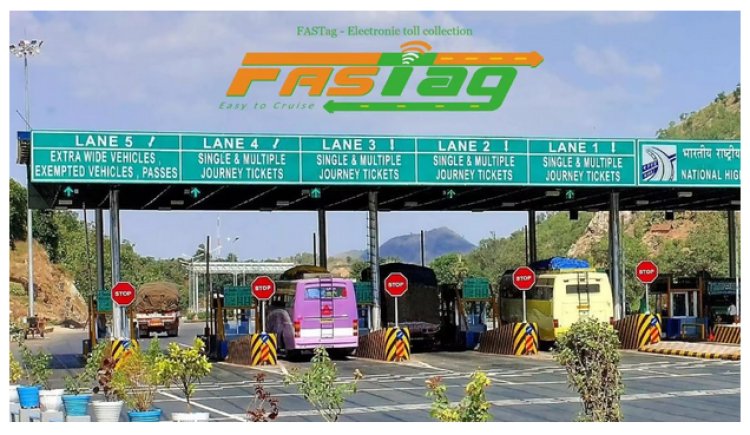
The annual pass, previously available for ₹3,000, will see its price increase to ₹3,075 starting April 1st. This pass is intended for non-commercial vehicles and will be valid at approximately 1,150 toll plazas across the country. Please note that the validity of this pass is limited to one year or 200 toll crossings, whichever occurs first.
New Rules for Railway Ticket Cancellation
Indian Railways has introduced significant changes to its ticket cancellation refund policy. Refunds will now be processed based on the time remaining before the train's scheduled departure:
- 8 to 24 hours prior: A 50% refund will be granted upon ticket cancellation.
- 24 to 72 hours prior: A deduction of 25% will be applied.
- More than 72 hours prior: Only a fixed (flat) cancellation charge will be deducted, and the remaining amount will be refunded.
- Less than 8 hours prior: No refund will be provided upon ticket cancellation.
- Additionally, for the convenience of passengers, the facility to change one's boarding point has now been extended up to 30 minutes prior to the train's departure—a move that will come as a major relief to passengers residing in metropolitan cities.
Weekly Reporting of Credit Scores and Loan Data
The RBI has issued new directives to banks with the aim of enhancing transparency for borrowers. Banks and financial institutions will now report loan-related data to credit information companies (such as CIBIL) on a weekly basis.
Previously, this report was provided every 15 days. Now, thanks to weekly reporting, your credit score will remain even more accurate and up-to-date. This will not only assist banks in accurately assessing risk but also ensure that customers receive immediate updates regarding their loan-related information.
Aadhaar No Longer Sufficient for PAN Card Applications
The importance of a birth certificate has now increased within the process of obtaining a PAN card. Effective April 1st, for new PAN card applications, an Aadhaar card alone will no longer be accepted as proof of date of birth.
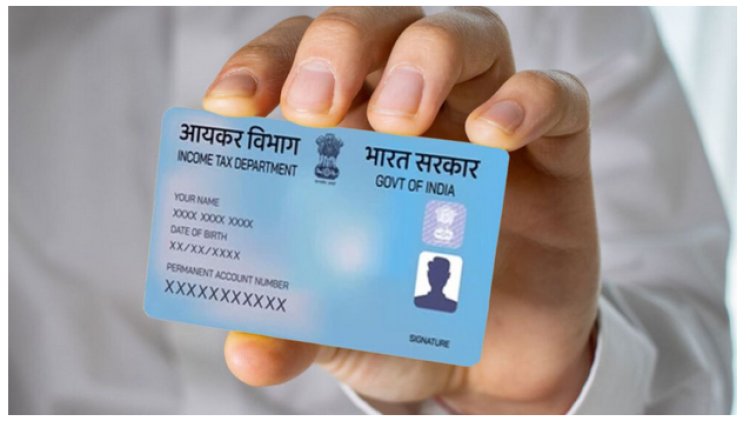
Applicants are now mandatorily required to submit one of the following documents: a birth certificate, a Class 10th marksheet, or a passport. Furthermore, PAN card numbers will now be issued exclusively based on the information contained in the Aadhaar card; therefore, it is absolutely essential that the details in the Aadhaar card are accurate. Additionally, the application forms for PAN cards will be revised starting April 1st.
Tax to be Levied on Sovereign Gold Bonds (SGB)
For those investing in gold, a significant change concerns taxation. Now, if you have purchased Sovereign Gold Bonds from a stock exchange (secondary market) rather than directly from the RBI, you will be liable to pay Long-Term Capital Gains Tax at a rate of 12.5% on such investments.
The benefit of tax exemption will continue to be available only to those who purchase the bonds directly from the RBI and hold them until maturity (8 years). Furthermore, banks have enhanced security measures for ATM transactions and digital payments. Now, for UPI or card payments, a mere OTP will no longer suffice; instead, 'Two-Factor Authentication' has been made mandatory.